World Wildlife Day
3 March 2019
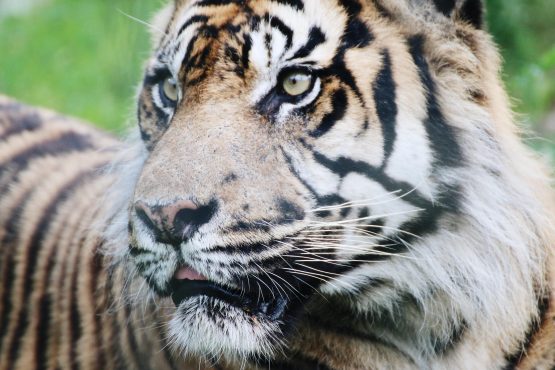
Today, March 3rd, is World Wildlife Day, an internationally recognised day where people across the globe come together to celebrate and raise awareness for the Earth's wild fauna and flora. This year's theme is life below water, but since we don't have many aquatic animals, we thought we'd focus a little extra on our critically endangered Sumatran tigers.
It is indeed the case that apex predators, in other words, the animals at the top of the food chain, ultimately affect water too. Predators play a very important role in an ecosystem. They ensure that prey populations do not become too numerous and in turn eat too much of what the prey animals eat. But predators affect things in many more ways than just keeping the numbers of prey animals and smaller predators down. The mere presence of predators in an area causes prey animals to change their behaviour, morphology (form and structure) and choice of habitat. This means that predators also affect the entire vegetation, both on land and in water, and benefit many other species. Predators that keep the number of large herbivores down also counteract the greenhouse effect and climate change on Earth.
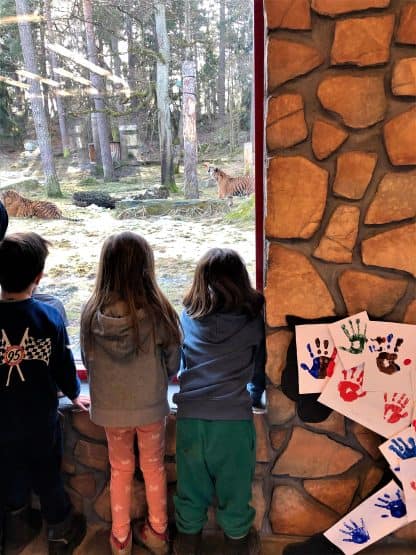
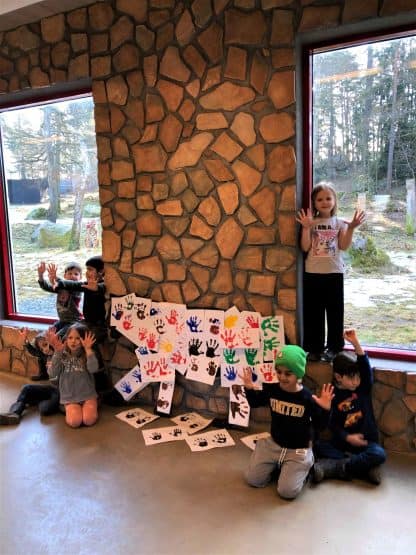
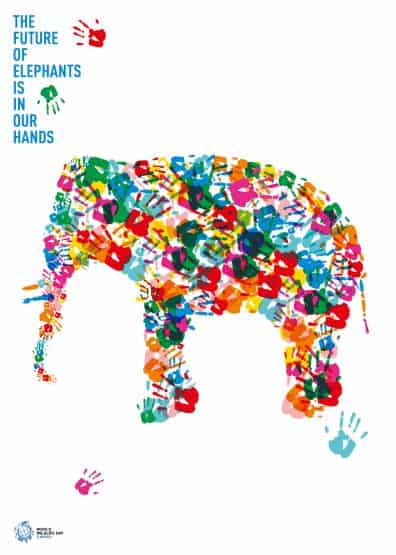
Together with the children from Gredby preschool, who visit us every month, we have created a piece of art inspired by a previous World Wildlife Day poster winner. The children have made handprints in various colours. Each finger represents a Sumatran tiger remaining in the wild (400-500).
Each finger on the black handprints corresponds to a tiger shot annually (50).
The park's tigers are called Wayan, Bagus, Keisha and Tenga and they are part of a conservation programme for endangered species.